23rd Conference on Detection of Intrusions and Malware & Vulnerability Assessment (DIMVA '26)
July 1 to 3, 2026 at Chania, Greece
Conference Program
Wednesday, July 1: Day 0
Meeting Point and Bus Departure to Welcome Events
Welcome events: Wine Tasting and Seaside Dinner
Join us for a visit to Agia Triada of Tsagarolon for wine tasting, followed by a seaside dinner at Loukoulos restaurant in Marathi. This is a great opportunity to get to know the other conference attendees and to recover from any travel fatigue. Please join us at this meeting point.
As the events will be held outside the city of Chania, please arrive at the meeting point no later than 12:50, as buses will depart promptly at 13:00 and it will not be possible to join later.
Wine Tasting in Agia Triada of Tsagarolon
Enjoy a wine tasting experience at the historic Agia Triada of Tsagarolon Monastery, featuring locally produced wines from its vineyards in the Akrotiri region of Chania.
We will depart from Agia Triada at 16:00 and travel by bus to Marathi. Once we reach Marathi (30 minutes drive) you can indulge in a relaxing seaside experience.
Dinner at Loukoulos Restaurant in Marathi
Loukoulos is a seaside restaurant in Marathi, Chania, offering fresh Cretan cuisine in a relaxed beachfront setting.
Bus Return to Chania
Thursday, July 2: Day 1 @ Grand Arsenal (Center of Mediterranean Architecture)
Registration
Chair's welcome to DIMVA'26
Session 1: IoT & Embedded Security (Session Chair: Giovanni Apruzzese)
Turbulence: Ransomware Proof of Concept for Resource-Constrained IoT Devices by Calvin Brierley (University of Kent); Yuxiang Huang (University of Bristol); Yichao Wang (University of Kent); James Pope, George Oikonomou (University of Bristol); Budi Arief (University of Kent)
HESTIA: Automated Application Code Identification in RTOS Firmware by Constantin Brinza (University of Twente); Peng Liu (University of Birmingham); Jorik van Nielen (University of Twente); Daan Prinsze (TU Delft); Marius Muench (University of Birmingham); Andrea Continella (University of Twente)
EventHorizon: Measuring Attacker Engagement in Multiprotocol IoT Tarpits by Anastasia Safargalieva, Dario Maddaloni, Emmanouil Vasilomanolakis (Technical University of Denmark)
Coffee break
Session 2: Platform Security & Hardware Vulnerabilities (Session Chair: Daniele Cono D'Elia)
From Signup to Takedown: An Analysis of Malicious File Distribution in Free Hosting Providers by Giada Stivala (CISPA Helmholtz Center for Information Security); Mika Meyer (Saarland University); Giancarlo Pellegrino (CISPA Helmholtz Center for Information Security)
ETW through VMI: Hypervisor-Level Collection of Windows ETW Telemetry by Alexander Schmitz, Anas Karazon, Artur Leinweber, Marvin Gudel, Raphael Springer, Sofie Telöken (Institute for Internet Security, Westphalian University of Applied Sciences, Gelsenkirchen, Germany); Lukas Beierlieb (Cyberus Technology GmbH, Dresden, Germany); Christian Dietrich (Institute for Internet Security, Westphalian University of Applied Sciences, Gelsenkirchen, Germany)
FROST: Fingerprinting Remotely using OPFS-based SSD Timing by Hannes Weissteiner, Tobias Weiser, Roland Czerny, Sudheendra Raghav Neela, Fabian Rauscher (Graz University of Technology); Jonas Juffinger (Liebherr); Daniel Gruss (Graz University of Technology)
Improving Counting Thread Consistency via Differential Measurement and Abating Frequency Variance on Modern Xeon Processors by Wei He, Wei Song, Da Xie, Hao Ma (Institute of Information Engineering, CAS); Yusi Feng (Southern University of Science and Technology); Wenhao Wang (Institute of Information Engineering, CAS)
Lunch
Session 3: Vulnerability Detection & Fuzzing (Session Chair: Ricardo J. Rodríguez)
ANVIL: Anomaly-based Vulnerability Identification without Labelled Training Data by Weizhou Wang, Eric Liu, Xiangyu Guo, Xiao Hu, Ilya Grishchenko, David Lie (University of Toronto)
BACFuzz: Exposing the Silence on Broken Access Control Vulnerabilities in Web Applications by I Putu Arya Dharmaadi (University of Groningen); Mohannad Alhanahnah (Hamad Bin Khalifa University); Van-Thuan Pham (University of Melbourne); Fadi Mohsen, Fatih Turkmen (University of Groningen)
SscRex: Practical Symbolic Execution of Solana Smart Contracts by Tobias Cloosters, Pascal Winkler, Jens-Rene Giesen (University of Duisburg-Essen); Ghassan Karame (Ruhr University Bochum); Lucas Davi (University of Duisburg-Essen)
Session 4: Systems Security & Microarchitectural Attacks (Session Chair: Vasileios Kemerlis)
MirrorShield: Cross-Architecture Linux Malware Analysis via Lightweight Emulation and LLM by Zihan Zhang, Wenqi Lin, Lingna Sun, Hongyi Wang, Jingyi Wang, Yanshu Mei, Fengwei Zhang (Southern University of Science and Technology)
Fast and Secure LLC Caches via Spatial Windows by Roland Czerny, Simon Lammer, Lukas Giner (Graz University of Technology); Anirban Chakraborty (Max Planck Institute for Security and Privacy); Daniel Gruss (Graz University of Technology)
Fun with flags: How Compilers Break and Fix Constant-Time Code by Antoine Geimer, Clémentine Maurice (Univ. Lille, CNRS, Inria)
Coffee break
Coffee break and poster setting up.
Session 5: AI for Security & Robustness (Session Chair: Alexandros Kapravelos)
Whispers in the Machine: Confidentiality in Agentic Systems by Jonathan Evertz, Merlin Chlosta, Lea Schönherr, Thorsten Eisenhofer (CISPA Helmholtz Center for Information Security)
Multi-Taxonomy Vulnerability Classification with Hierarchically Finetuned Language Models by Franco Terranova, Sana Rekbi, Abdelkader Lahmadi, Isabelle Chrisment (Université de Lorraine, CNRS, Inria, LORIA)
VulnRep: Reproducer-Verified LLM-Based Vulnerability Discovery by Mischa Meier (University of Bonn,Fraunhofer FKIE); Annika Kuntze, Veit Eysholdt, Christoph Geron, Maxim Shevchishin, Niklas Steffen, Maximilian Leiwig, Julian Steffen, Felix Boes (University of Bonn); Matthew Smith (University of Bonn,Fraunhofer FKIE); Sergej Dechand (Max Planck Institute for Security and Privacy)
Adversarial Robustness of AI-Generated Image Detectors in the Real World by Sina Mavali (CISPA Helmholtz Center for Information Security); Jonas Ricker (Ruhr University Bochum); David Pape (CISPA Helmholtz Center for Information Security); Asja Fischer (Ruhr University Bochum); Lea Schönherr (CISPA Helmholtz Center for Information Security)
Poster Session
A Dynamic Analysis framework for Android Malware Detection by Junping Zhu, Weijian Zhao (Northeastern University); Aaron Hunter (British Columbia Institute of Technology, Vancouver, Canada); Maryam Tanha (Northeastern University)
The Simpler, the Stealthier: a Framework for Evaluating Adversarial Domain Generation Algorithm Models by Tomás Pelayo-Benedet (Universidad de Zaragoza), Ricardo J. Rodríguez (Universidad de Zaragoza)
Automated Multi-Ecosystem Collection and Preservation of Malicious Open Source Packages by Marc Ohm (University of Bonn & Fraunhofer FKIE); Timo Pohl (University of Bonn)
To Play or Not to Play: Insights and Lessons Learned from 20 Years of CTFs with ENOFLAG by Joerg Schneider, Sebastian Neef, Sebastian Koch (Technische Universitaet Berlin)
What HTTP Basic Authentication Reveals: Measuring Identifiable Internet-Exposed Devices by Ruri Otsuka (Mitsubish Electric, Yokohama National University); Ryu Kuki, Yin Minn Pa Pa, Katsunari Yoshioka (Yokohama National University)"
Securing the Control & Data Flows of LLM Agents via Dual-LLM & Taint-Tracking by Ioannis Tzachristas (Huawei Heisenberg Research Center, Munich, Germany / Technical University of Munich, Germany); Aifen Sui (Huawei Heisenberg Research Center, Munich, Germany)
Test-Driven Detection Engineering by Lukas Schmidt (FH Münster University of Applied Sciences, Atruvia AG); Tilman Frosch, Luca Ebach, Anton Wendel (Atruvia AG); Sebastian Schinzel (FH Münster University of Applied Sciences)
The Lazarus Effect: Lifecycle Dynamics of Malicious Infrastructure by Eva Papadogiannaki (Dienekes); Sotiris Ioannidis (Technical University of Crete); Kostas Solomos (Brandeis University)
Rethinking Security in LLM Code Generation through Real-World Risk Scenarios by Lixun Ma (Zhejiang University); Ruolong Ma (China Academy of Information and Communications Technology); Bei Wang (MetaX Integrated Circuit Co., Ltd.); Feng Wei (China Academy of Information and Communications Technology); Zhenguang Liu (Zhejiang University); Lorenzo Cavallaro (University College London); Wentao Chen (China Academy of Information and Communications Technology)
Mind the Gap - Characterizing the Temporal Blind Spot Between GSB and DNS Resolution by Tomer Gal (Ariel University); Fujiao Ji, Doowon Kim (University of Tennessee, Knoxville); Harel Israel Berger (Ariel University)
Dinner @ Canale
Canale is a stylish seaside restaurant in Chania’s Old Town, offering Cretan cuisine and fresh seafood.
Friday, July 3: Day 2 @ Grand Arsenal (Center of Mediterranean Architecture)
Keynote: IoT Threat Assessment with the AttackDefense Framework (Session Chair: Veelasha Moonsamy)

Abstract: The talk focuses on threat assessment for the Internet of Things (IoT). It presents pervasive security vulnerabilities in IoT protocols, including impersonation and machine-in-the-middle attacks on Fast IDentity Online v2 (FIDO2) and the Open Charge Point Protocol (OCPP). It then introduces a new and practical solution for IoT threat assessment based on threat modeling, a somewhat lost art in academia that we should revive! The talk explains how to threat-model IoT devices and their life cycles using the AttackDefense Framework (ADF). Through a real-world cryptowallet case study that we run with a team of hardware, software, and protocol security experts, we demonstrate the effectiveness of ADF in threat modeling heterogeneous attacks and defenses on the full IoT stack. We also discuss current limitations, which should provide a basis for exciting discussion on how to improve IoT threat modeling and the ADF framework! The audience will learn about the state of the art in IoT threat assessment and modeling, as well as related future trends.
Bio: Daniele Antonioli is an Assistant Professor (Class 1) at EURECOM with the software and system security (S3) group. He is doing research and teaching in system security and privacy, with an emphasis on protocols such as Bluetooth, FIDO2, and OCPP, embedded systems, such as vehicles, mobile devices, and IoT devices, and cyber-physical systems such as industrial control systems. Daniele holds a French HDR (Habilitation à diriger des Recherches) from the École polytechnique in Paris and a PhD funded by a PFG fellowship from SUTD in Singapore.
Coffee break
Session 6: Software & Platform Security (Session Chair: Edlira Dushku)
Glasswall: Enforcing User-Defined Data Usage Policies in Functions as a Service by Silvan Niederer, Ali Hajiabadi, Kaveh Razavi (ETH Zurich)
Silent Consent, Persistent Risk: Android Permission Groups and Custom Permissions by Olawale Amos Akanji, Manuel Egele, Gianluca Stringhini (Boston University)
Dead Weight: Analyzing Code Bloat and Its Security Implications in WebAssembly Binaries by Pratik M. Kamble, Aravind Prakash (Binghamton University)
New Platform, Old Issues: How Web-based TV Broadcasts threaten Users' Security by Carlotta Tagliaro, Andrej Danis (TU Wien); Kevin Borgolte (Ruhr University Bochum); Martina Lindorfer (TU Wien)
Lunch
Session 7: Timing Attacks and System-Level Defenses (Session Chair: Michalis Polychronakis)
Systematic Timing Leakage Analysis of NIST PQDSS Candidates: Lessons Learned by Koffi Adjonyo (Technology Innovation Institute); Sébastien Bardin (CEA List & Université Paris Saclay); Emanuele Bellini (Technology Innovation Institute); Mahmudul Faisal Al Ameen (CEA List & Université Paris Saclay); Gilbert Ndollane Dione, Robert Merget (Technology Innovation Institute); Yanis Sellami, Frédéric Recoules (CEA List & Université Paris Saclay)
Santa: Language-Agnostic Automated System Call Policy Learning for Cloud Microservices by Meghna Pancholi, Andreas Kellas, Kostis Kaffes (Columbia University); Steven M. Bellovin (Columbia University/Georgetown Law); Simha Sethumadhavan (Columbia University/Chip Scan); Vasileios P. Kemerlis (Brown University)
Client-Side Mitigation of Remote Latency Side-Channel Attacks by Stefan Gast, Simone Franza (Graz University of Technology); Martin Heckel (Hof University of Applied Sciences, Institute of Information Systems (iisys)); Jonas Juffinger (Liebherr); Daniel Gruss (Graz University of Technology); Johanna Ullrich (IT:U Interdisciplinary Transformation University Austria)
Session 8: Malware Analysis & Detection (Session Chair: Sven Dietrich)
MoZombie: A Case Study of the Self-Sustaining Mozi Botnet Architecture by Murtuza Mohammed, Georgios Smaragdakis, Harm Griffioen (TU Delft)
Instruction-to-Program Cross-Layer Graph Neural Network for Robust Windows Malware Detection by Haodong Chen, Lirong Fu (Hangzhou Dianzi University); Yuchen Zhang (New York University); Lin An, Gangyong Jia (Hangzhou Dianzi University)
FlowScanner: Malware Detection via Kernel-supported Basic-Block Tracing by Pasquale Caporaso (Università degli studi di Roma "Tor Vergata"); Ludovico Zarrelli (Università degli studi di Roma "Tor Vergata" / DGS S.p.a, Rome, Italy); Giuseppe Bianchi, Francesco Quaglia (University of Rome Tor Vergata)
Coffee break
Session 9: Network & Communication Security (Session Chair: Georgios Smaragdakis)
Protocol-Aware Detection of TEID Brute-Force Attacks in 5G Networks by Muhammad Raza, Helena Rifà-Pous (Universitat Oberta de Catalunya); Carles Garrigues Olivella (Universitat Autònoma de Barcelona)
Unseen Traffic: IPv6 Blindspots in Sandboxes by Stefan Grosser, Edlira Dushku (Aalborg University)
Traces in WAN Traffic: Inferring Alarm States and User Activity from Encrypted Smart Home Traffic by Paul Mairinger, Joachim Fabini, Tanja Zseby (TU Wien)
Session 10: Security Operations & Incident Response (Session Chair: Michael Meier)
Can SOC Operators Explain their Decisions while Triaging Alarms? A Real-World Study by Jessica Moosmann, Irdin Pekaric, Giovanni Apruzzese (University of Liechtenstein)
Towards Model-Driven Incident Response Playbooks for Kubernetes by Merlin Kling, Yannik Franke (SVA System Vertrieb Alexander GmbH, Wiesbaden, Germany); Jannis Hamborg (Darmstadt University of Applied Sciences); Franca Speth (SVA System Vertrieb Alexander GmbH, Wiesbaden, Germany); Christoph Krauß (Darmstadt University of Applied Sciences)
A Provenance Graph Anomaly Detection Framework Based on Bidirectional Graph Attention Networks by Jibin Luo, Jie Li, Yangjie Cao, Ziyang He (School of Cyber Science and Engineering, Zhengzhou University, Zhengzhou, China)
Closing notes and good bye
Sponsors
We thank our sponsor!

Call for Papers
Important Dates (AoE)
- Cycle 1:
-
Submission:
03 December 202510 December 2025 (extended!) - Notification (accept/reject): 27 January 2026
- Submission Site: https://dimva26r1.hotcrp.com/
-
Submission:
- Cycle 2:
-
Submission:
11 February 202618 February 2026 (extended!) - Notification (accept/reject): 03 April 2026
- Submission Site: https://dimva26r2.hotcrp.com/
-
Submission:
- Camera ready deadline: 28 May 2026
- Conference: 1-3 July 2026
Conference Registration
To be included in the proceedings, every accepted paper requires a general registration and in-person presentation. Registration payment must be completed before the camera-ready deadline. Registration will open around mid April.
General Information
The annual DIMVA conference serves as a premier forum for advancing the state of the art in the broader areas of intrusion detection, malware analysis, and vulnerability assessment. Each year, DIMVA brings together international experts from academia, industry, and government to present and discuss novel research in these areas. DIMVA is organized by the special interest group Security – Intrusion Detection and Response (SIDAR) of the German Informatics Society (GI). The conference proceedings will appear in the Springer Lecture Notes in Computer Science (LNCS) series.
Topics of Interest
DIMVA solicits submissions of high-quality, original scientific papers presenting novel research on malware analysis, intrusion detection, vulnerability assessment, and related systems security topics.
Topics of interest include, but are not limited to:
Intrusions
- Novel approaches and domains
- Insider detection
- Prevention and response
- Data leakage, exfiltration, and poisoning
- Result correlation and cooperation
- Evasion and other attacks
- Potentials and limitation
- Operational experiences
- Privacy, legal, and social aspects
- Targeted attacks
- Analysis or detection of cryptocurrency heists
Malware
- Automated analyses
- Behavioral models
- Prevention and containment
- Classification
- Lineage
- Forensics and recovery
- Underground economy
- Vulnerabilities in malware
- Financially targeted malware (e.g., ransomware, DeFi)
Vulnerability detection
- Vulnerability prevention
- Vulnerability analysis
- Exploitation and defenses
- Hardware vulnerabilities
- Situational awareness
- Active probing
- Vulnerabilities in decentralized systems
Papers will be judged on novelty, significance, correctness, and clarity. We expect all papers to provide enough details to enable reproducibility of the experimental results. We encourage papers that bridge research in different communities. We also welcome experience papers that clearly articulate lessons learnt.
Types of Submissions Solicited
DIMVA solicits full papers presenting novel and mature research results. Papers are limited to 25 pages total in Springer LNCS format, with a maximum of 18 pages for the main paper content, 5 pages for the bibliography, and 2 pages for appendices. For the initial submission, authors are encouraged to start the bibliography and appendices, if any, each on a new page.
Papers that do not follow the above formatting guidelines may be rejected without review. Authors are not allowed to resubmit rejected Cycle 1 papers (including desk-rejects) to Cycle 2.
Submission Guidelines
DIMVA 2026 will adopt a double-blind reviewing process. All submissions should be appropriately anonymized. Author names and affiliations must be excluded from the paper. Furthermore, authors should avoid obvious self-references, and should cite their own previous work in third person, whenever necessary. Papers that are not properly anonymized risk being rejected without review.
Submissions must be original work and may not be under submission to another venue at the time of review. At least one author of each accepted paper is required to physically present the submitted work at the conference, for the paper to be included in the proceedings.
Authors are encouraged to submit artifacts (e.g., code, datasets) appropriately anonymized, using, e.g., https://anonymous.4open.science/.
Use of Generative AI
The role of AI in research is rapidly evolving, and our community must approach its use with clarity and integrity. Authors may employ generative AI tools (e.g., LLMs) as part of a defined research methodology, to improve the presentation of their manuscript, and to produce artifacts that the authors subsequently verify for correctness. However, it is not acceptable to delegate the creation of research content or the writing of the paper to generative AI tools, nor to present artifacts or analyses generated by such tools without independent verification. In cases not explicitly covered above, authors must disclose the use of generative AI tools at the time of submission, with a level of detail proportional to the extent of text or content generated.
Ethical considerations
Research can potentially lead to adverse outcomes. Individuals or organizations may experience negative consequences during the research process, immediately following publication, or in the future. Authors must proactively anticipate and address potential negative consequences of both conducting and publishing their research. Submissions may be rejected regardless of scientific merit if they fail to adequately address ethical concerns. If a paper relates to human subjects, analyzes data derived from human subjects, may put humans at risk, or might have other ethical implications, authors should disclose if an ethics review (e.g., IRB approval) was conducted, and discuss in the paper how ethical and legal concerns were addressed. IRB exemptions may not be sufficient grounds for proper mitigation of ethical concerns. If the paper reports a potentially high-impact vulnerability, the authors should report or at least discuss their plan for responsible disclosure. The chairs will contact the authors in case of concerns.
If you have any questions, please contact the program chairs at pc-chairs@dimva.org.
Call for Posters
Important Dates (AoE)
- Rolling Submission Period: 27 January 2026 - 27 April 2026
- Notification: Rolling, as submissions are reviewed
- Camera-ready: 28 May 2026
- Poster titles must begin with “Poster:”.
- Authors of papers accepted to the main conference must not submit posters based on those papers. This restriction is intended to ensure the poster session highlights work not already appearing in full form in the conference.
Submission Guidelines
Review Process
Committee
Program chairs (email: pc-chairs@dimva.org)
- Chair Veelasha Moonsamy (Ruhr University Bochum)
- Co-chair Daniele Cono D'Elia (Sapienza University of Rome)
Program committee
- Advait Patel, Broadcom
- Aisha Ali-Gombe, Louisiana State University
- Alexandre Bartel, Umeå University
- Amin Kharraz, Florida International University
- Andrea Continella, University of Twente
- Andrea Mambretti, IBM Research Europe - Zurich
- Andrea Oliveri, EURECOM
- Anita Nikolich, UIUC
- Arash Shaghaghi, The University of New South Wales
- Bart Coppens, Ghent University
- Behzad Ousat, Florida International University
- Bhupendra Acharya, University of Louisiana at Lafayette
- Daniel Arp, TU Wien
- Daniel Gruss, Graz University of Technology
- Dario Stabili, University of Modena and Reggio Emilia
- David Klein, Technische Universität Braunschweig
- Edlira Dushku, Aalborg University
- Emilio Coppa, LUISS University
- Fabio Gritti, UC Santa Barbara
- Flavio Toffalini, Ruhr University Bochum
- Gertjan Franken, KU Leuven
- Giovanni Apruzzese, University of Liechtenstein
- Jason Polakis, University of Illinois at Chicago
- Jo Van Bulck, KU Leuven
- Johanna Ullrich, University of Vienna
- Mannat Kaur, Max Planck Institute for Informatics
- Manuel Egele, Boston University
- Marco Balduzzi, Trend Micro Research
- Marco Cova, Wiz
- Marcus Botacin, Texas A&M University
- Mathias Fischer, University of Hamburg
- Maximilian Noppel, Karlsruhe Institute of Technology
- Michael Meier, University of Bonn and Fraunhofer FKIE
- Michael Schwarz, CISPA Helmholtz Center for Information Security
- Michalis Diamantaris, Technical University of Crete
- Michele Carminati, Politecnico di Milano
- Min Chen, Vrije Universiteit Amsterdam
- Moritz Schloegel, Arizona State University
- Muhammad Ibrahim, Georgia Tech
- Prashast Srivastava, AWS
- Ricardo J. Rodríguez, Universidad de Zaragoza
- Roland Yap, National University of Singapore
- Seungwon Shin, KAIST
- Simon Koch, University of Innsbruck
- Stefano Zanero, Politecnico di Milano
- Stijn Volckaert, KU Leuven
- Sven Dietrich, City University of New York
- Tapti Palit, UC Davis
- Tiago Heinrich, Max Planck Institute for Informatics
- Vasileios Kemerlis, Brown University
- Vinod Yegneswaran, SRI
- Yuqing Yang, CISPA Helmholz Center for Information Security
- Yuseok Jeon, Korea University
- Zion Basque, Arizona State University
Publication chair
- Michele Carminati (Politecnico di Milano)
Poster co-chairs (email: Poster co-chairs)
- Tarini Saka (Ruhr University Bochum) - tarini.saka@ruhr-uni-bochum.de
- Mateo Marini (Sapienza University of Rome) - m.marini@diag.uniroma1.it
General chairs
- Chair Sotiris Ioannidis (Technical University of Crete) - sioannidis@tuc.gr
- Co-chair Michalis Diamantaris (Technical University of Crete) - mdiamantaris@tuc.gr
Publicity chair
- Konstantinos Spyridakis (Technical University of Crete)
Steering committee
- Sven Dietrich (co-chair)
- Ulrich Flegel (co-chair)
- Michael Meier (co-chair)
- Michele Caminati
- Lorenzo Cavallaro
- Manuel Egele
- Mathias Fischer
- Giorgio Giacinto
- Daniel Gruss
- Federico Maggi
- Mathias Payer
Venue: Grand Arsenal (Center of Mediterranean Architecture)
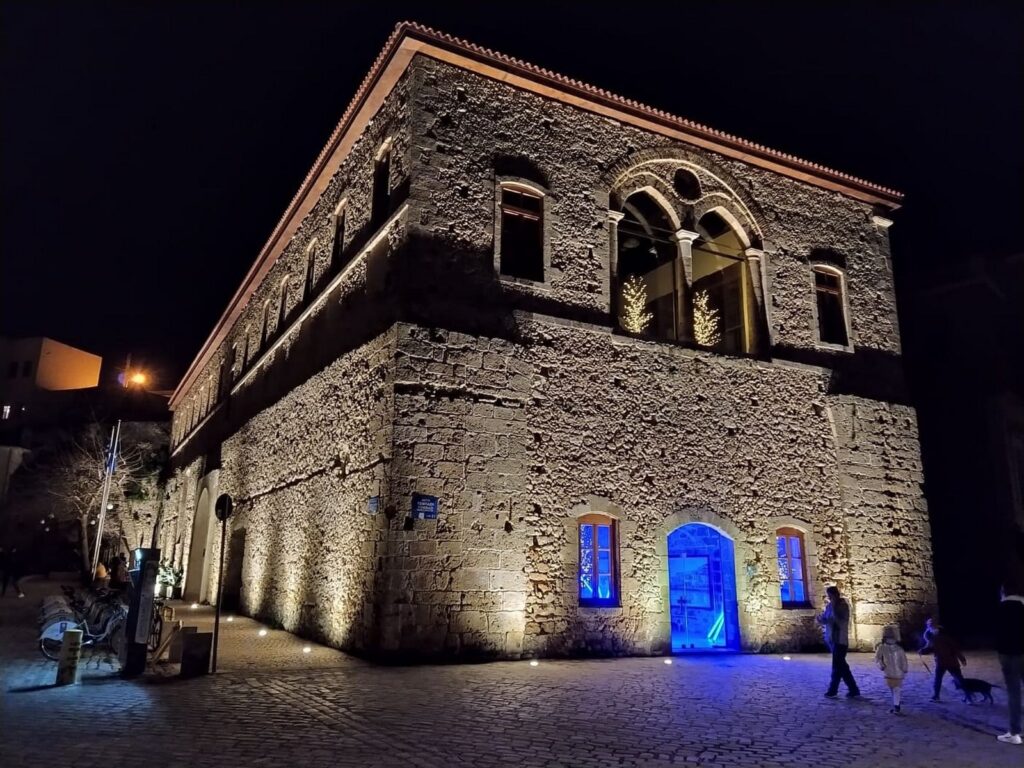
The Grand Arsenal is the last of the 17 Neoria to the west. Its construction started in 1585 by the Intendant Alvise Grimani. A new era began for the Grand Arsenal with the addition of the second floor, in 1872, during the Ottoman era. The building hosted several important public services and authorities. From a roofless, abandoned site, today the building has given a second chance to life by being converted into a remarkable multipurpose space for events and expositions. After its restoration in 2002, it is now the Center of Mediterranean Architecture, hosting important cultural events, scientific and political symposiums, artistic exhibitions, international venues with special emphasis on architecture.
Address: Akti Enoseos & Georgios Katechakis Square (View Location on Google Maps)
Travel Information
By Plane
Chania Airport (CHQ) – Ioannis Daskalogiannis
BUS (KTEL)
The most inexpensive way to leave the airport of Chania is by taking a KTEL bus. Fare 2-3 EUR, The station is located outside the building, and you may purchase your tickets beforehand or directly from the bus driver. Bus final destination is the central bus station of Chania. Then you can walk to the venue (approximately 15 minutes, 1.1km) or take a taxi.
- Fare: EUR 2-3
- Duration: 20 minutes
- Walk: 10 minutes from the central bus station to the venue
- Frequency: Every 30 minutes
TAXI
Otherwise, the simplest way to get to Chania center is to take a taxi from Chania International Airport (CHQ), Ioannis Daskalogiannis. The fare for reaching the Chania center is approximately EUR 27 and the journey takes around 25 minutes.
Tip: Taxi stands are always available. However, if you prefer to leave the premises immediately, you may book a transfer service in advance. You can also arrange a pick-up with local drivers.
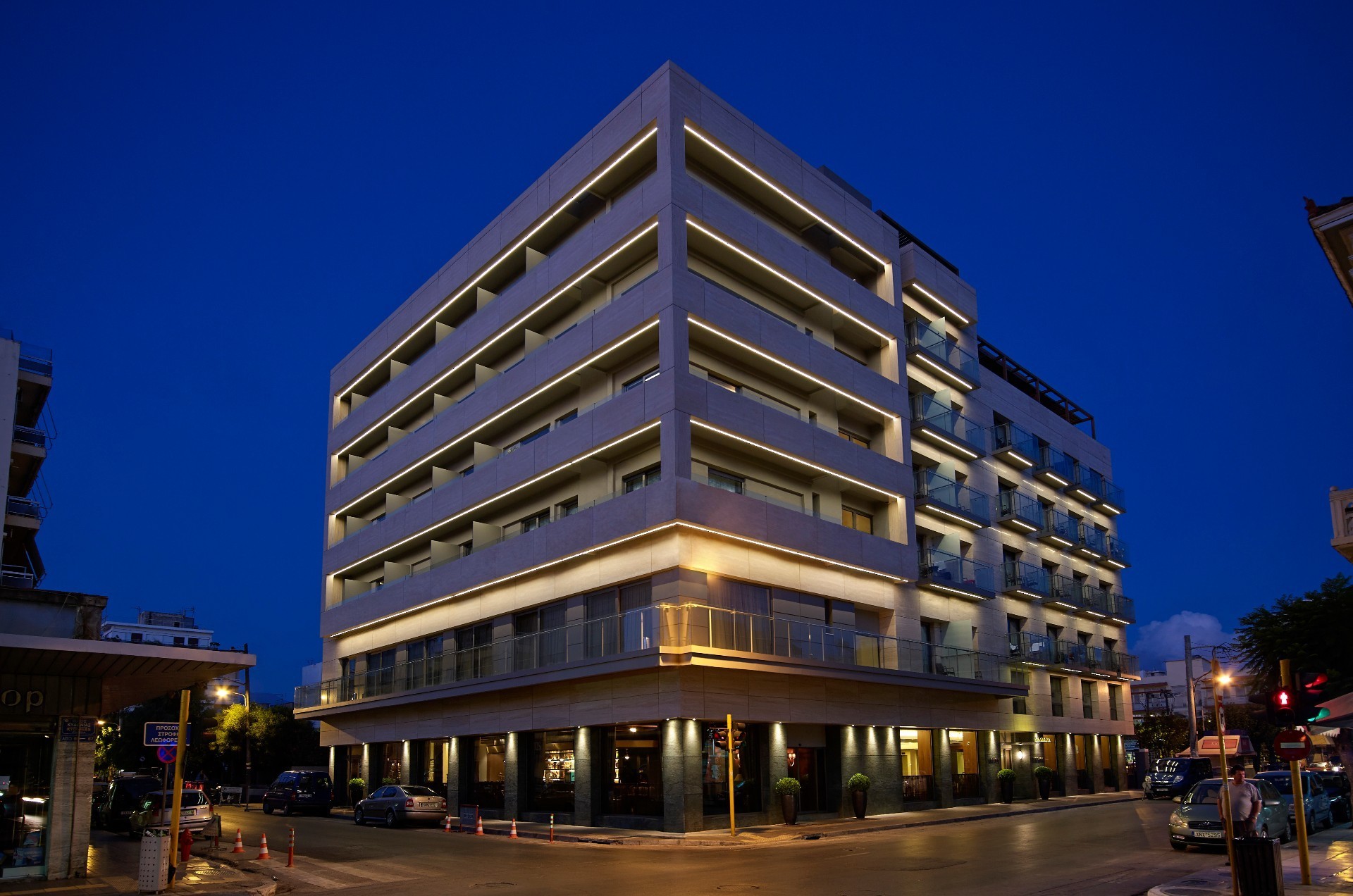
Hotels
The Chania Hotel
Address:
1866 Square, Chania
Contact:
+00800 161 2203 0036,
+30 28210 90002
Email:
info@thechaniahotel.com

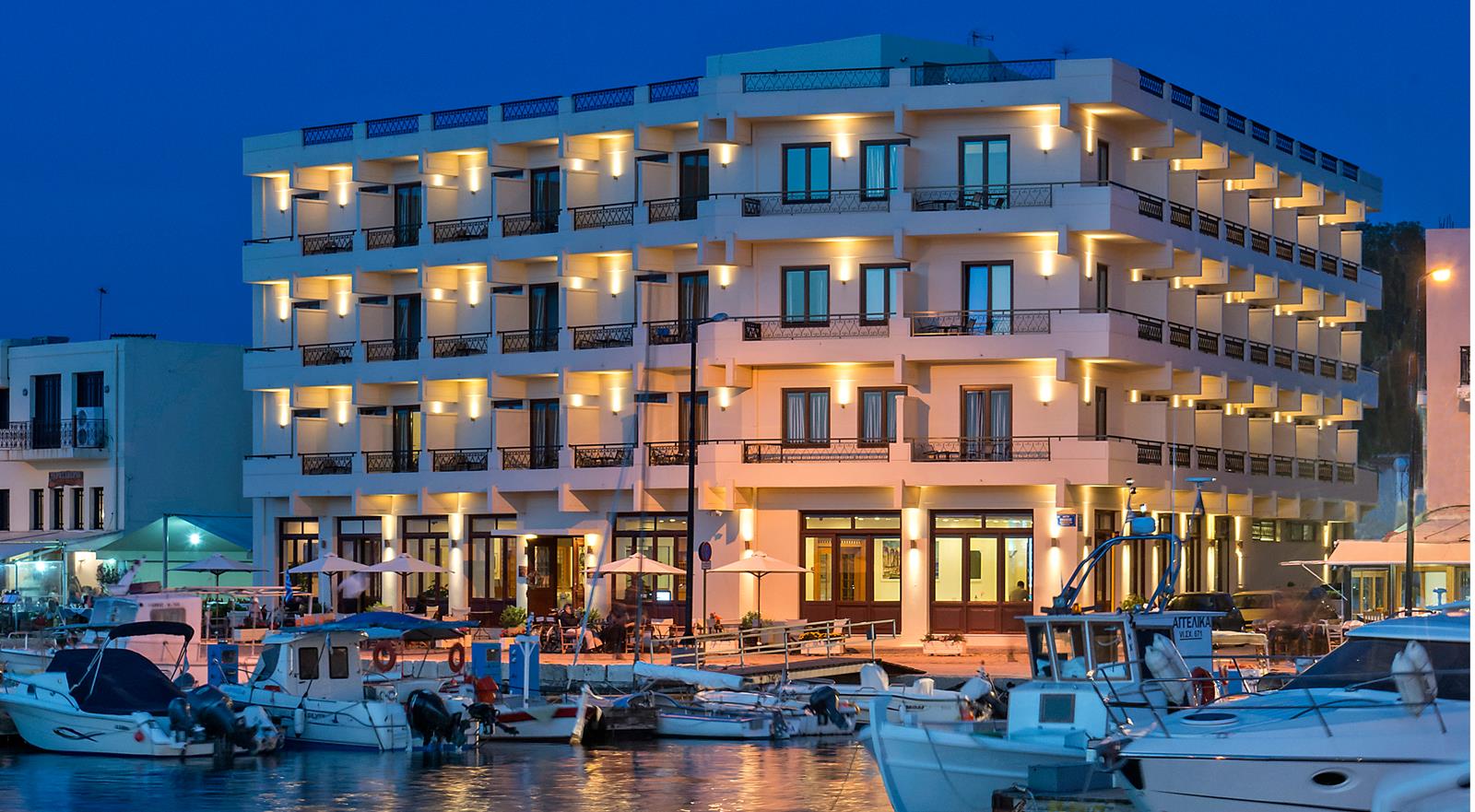
Porto Veneziano Hotel
Address:
Akti Enoseos, Chania (Old Venetian Harbour)
Contact:
+30 28210 27100
Email:
hotel@portoveneziano.gr
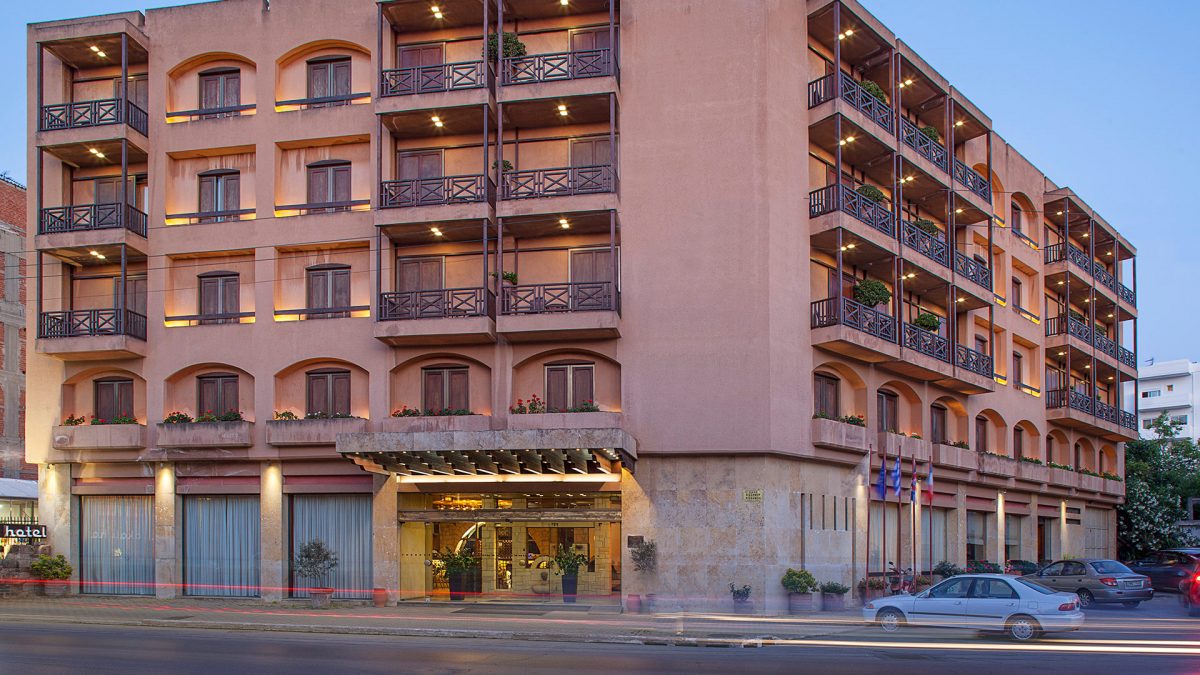
Civitel Akali
Address:
Kissamou 55, Chania
Contact:
+30 28210 92872
Email:
reservations@akali-hotel.gr
Kriti Hotel
Address:
Nikiforou Foka & Kiprou , Chania
Contact:
+30 28210 51881
Email:
info@kriti-hotel.gr

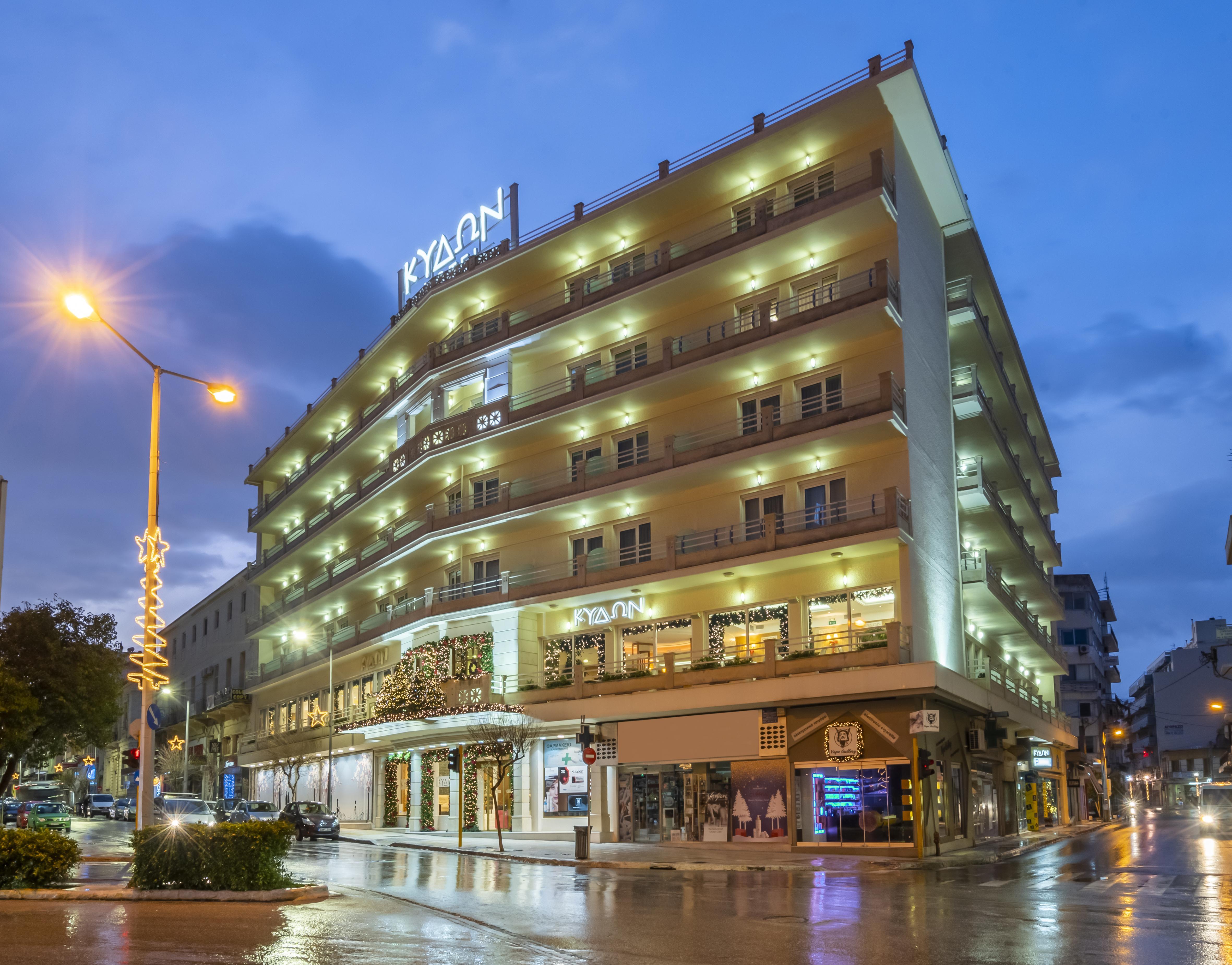
Kydon Hotel
Address:
Sofokli Venizelou Sq. & 2, Str. Tzanakaki , Chania
Contact:
+30 28210 52280
Email:
info@kydonhotel.com
Samaria Hotel
Address:
69th Kidonias street, Chania
Contact:
+30 28210 38600
Email:
info@samariahotel.gr
Content Responsibility and Admin
Sotiris Ioannidis
Technical University of Crete
Akrotiri Campus
731 00 Chania, Greece
Telephone: +30 28210 37344
E-Mail: sioannidis@tuc.gr
Privacy Policy
Processing of your personal data when you visit this website
When visiting this website, we do not store any personal data. Your IP address is processed solely to the extent required for the technical delivery of the web content. Depending on your browser configuration, additional information such as browser type, version, operating system, and referrer URL may also be transmitted. This data is used exclusively to ensure the proper and optimized presentation of the website. No further processing of personal data is carried out, and all transmitted data is deleted immediately after use.
Cookies
This website does not use cookies.
Server log files
This website does not save temporary logs.
External resources
All pictures, fonts, and additional resources are retrieved solely from our server, so that your visit to our website does not leave any traces at third parties.